Emberline Hospitality
Every channel, one kitchen queue.
Unified order ingestion and offline-first kitchen displays across 180 venues, cutting ticket times 31% during peak service.
- Year
- 2024
- Duration
- 7 months
- Team
- 10 people
- Sector
- Restaurant & Hospitality
0%
Ticket time
Reduction during peak service
0%
Direct order share
Up from 19% of total volume
0%
Order errors
Fewer kitchen-attributed errors
0
Venues live
Across five brands and two countries
Emberline Hospitality Group
A multi-concept restaurant group operating 180 venues across five brands in the United States and United Kingdom.
To run restaurants where the kitchen is never fighting the technology.
Logo concept
An ember arc forming the rim of a plate — heat and service as a single gesture.
#991B1B#F97316Founded
2007
Headquarters
Chicago, Illinois
Employees
9,600
Sector
Restaurant & Hospitality
Every surface we shipped
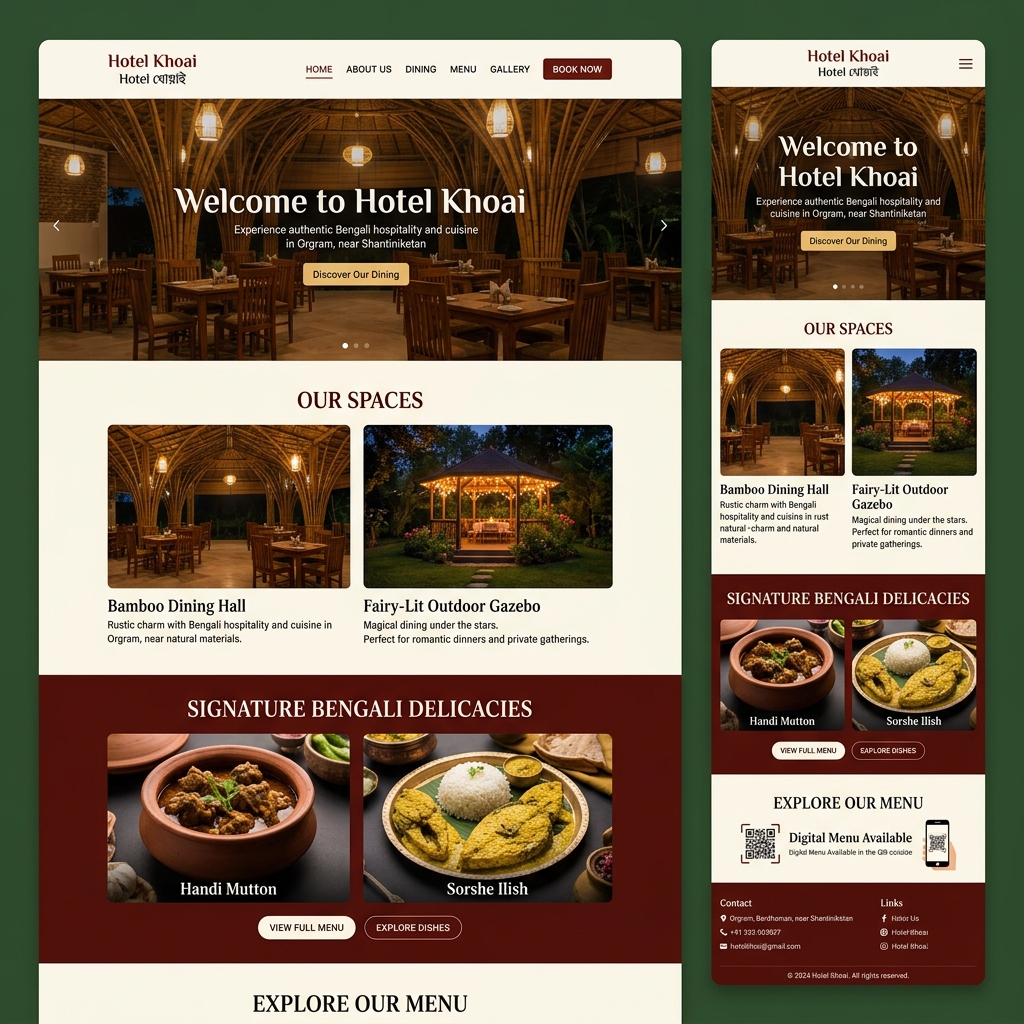
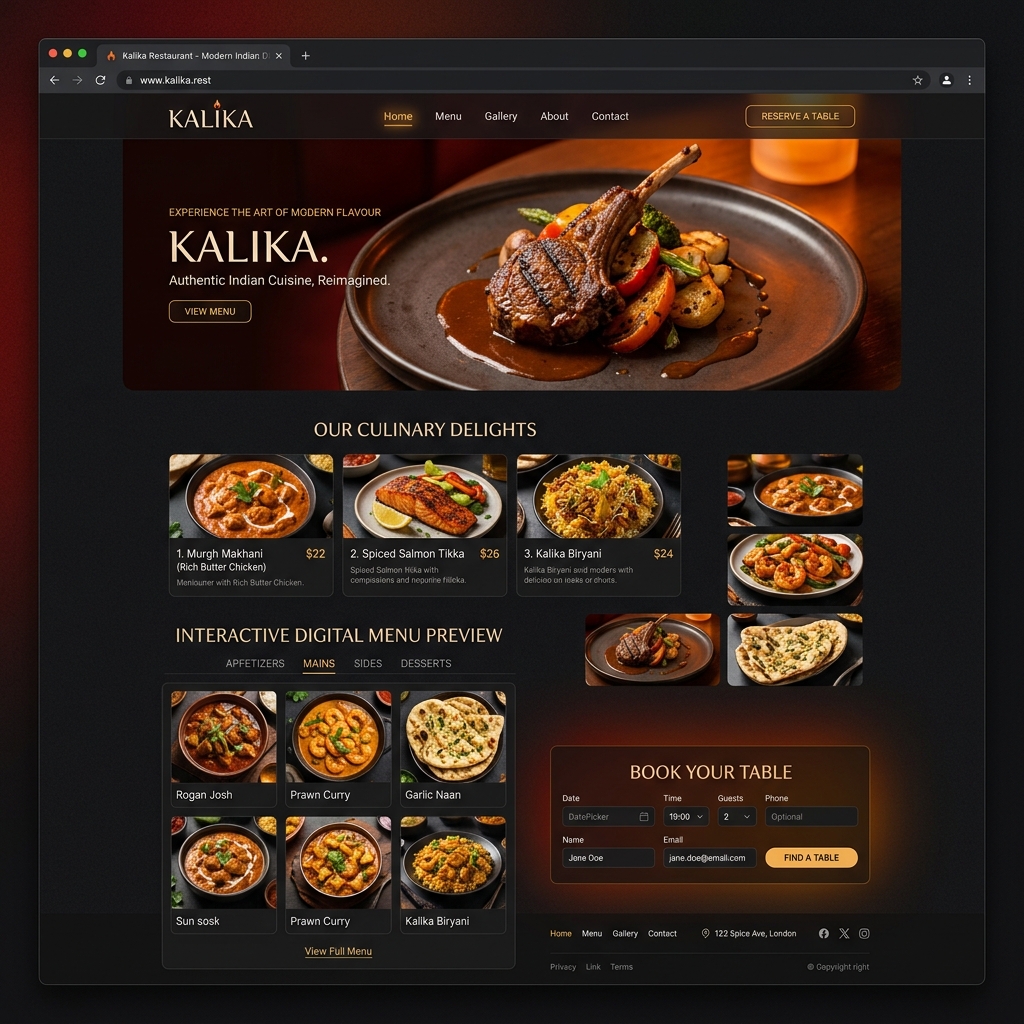
12 designed screens across 3 deliverables, rendered live rather than captured as static images.
Brand Sites
Multi-brand storefronts with direct ordering.
Kitchen Display
Offline-first ticket queue with course timing.
Venue Analytics
Ticket times, margin, and channel mix.
Order Stream
Unified queue across every ordering channel.
Menu Management
Multi-brand menus with per-venue availability.
Reports
Scheduled exports and compliance-ready statement generation.
Settings
Organization, team, and integration configuration.
Mobile application
Sign In
Create Account
Notifications
Profile
Direct Checkout
Across every form factor
The same design system, rendered at each breakpoint it has to survive.
The challenge
Emberline's kitchens ran four screens: the POS, two delivery-platform tablets, and a printer for phone orders. Nothing sequenced across them, so a kitchen at peak was reconciling four independent queues by eye. Ticket times had crept up 22% over two years as delivery volume grew, and order errors attributed to the kitchen were rising in step. The venue Wi-Fi, in a majority of locations, was genuinely unreliable.
Research
- Peak-service observation across twelve venues spanning all five brands
- Analysis of 90 days of ticket-time data segmented by channel mix
- Wi-Fi reliability measurement at 40 representative venues
- Kitchen staff interviews on where the current setup failed them
The solution
Every channel — POS, three delivery platforms, phone, and first-party web and app — normalizes into a single order stream with consistent structure and timing metadata. The kitchen display sequences the combined queue by required fire time rather than arrival time, which is what the kitchen was approximating manually. Critically, the display is offline-first: it holds its full queue locally and continues operating through network loss, syncing state when connectivity returns. Given the Wi-Fi measurements, anything else would have failed in the majority of venues.
UX decisions
Sequencing by fire time, not arrival time
Kitchens were already doing this mentally. Encoding it removed the cognitive load that peak service made expensive.
Offline state shown as a quiet indicator, never a blocking warning
An alarming offline banner caused staff to stop and troubleshoot mid-service. The display works offline; it just needed to say so calmly.
Channel origin shown but visually de-emphasized
The kitchen doesn't cook differently for a delivery order, but expo needs to know where it goes. Prominence at the wrong station created confusion.
No confirmation dialogs anywhere in the kitchen flow
Gloved hands, wet screens, and time pressure make dialogs actively dangerous. Every action is instead single-tap and undoable.
Features
- Unified order ingestion across seven channel types
- Fire-time sequencing across the combined queue
- Offline-first kitchen display with deterministic sync
- Multi-brand menu management with per-venue availability
- First-party ordering with integrated loyalty
- Course timing and expo coordination
- Venue analytics on ticket time, margin, and channel mix
Technology
Architecture
Channel adapters normalize inbound orders into a canonical schema published to Kafka. A Node service maintains per-venue queue state in PostgreSQL with Redis for hot queue reads. The React Native kitchen display holds a local SQLite queue as its working source of truth and reconciles through an append-only sync log — kitchen state changes always win over server state, since the kitchen is the physical reality. Menu configuration pushes down per venue with availability overrides that survive disconnection.
Results
Peak ticket time fell 31%. Kitchen-attributed order errors dropped 58%. First-party ordering grew from 19% to 44% of volume as the direct channel became genuinely faster than the delivery apps — worth substantially more per order given platform commission. All 180 venues went live over six weeks with no service-day incidents.
Lessons learned
- 01Offline-first was not a resilience nicety here; the Wi-Fi survey made it a hard requirement. Measuring the venues before designing saved us from shipping something that worked in the office and failed in the field.
- 02Removing every confirmation dialog felt reckless in review and was clearly correct in service. Undo is a better safety mechanism than confirmation when hands are busy.
- 03The direct-channel growth was an unplanned second-order effect. Making first-party ordering faster than the aggregators shifted mix more than any marketing spend had.
How the engagement ran
7 months across 4 phases with a team of 10.
Service Observation
4 weeksObserved peak service across twelve venues to understand kitchen constraints.
Service flow mapFailure analysisHardware assessmentOrder Ingestion
10 weeksUnified every ordering channel into a single normalized stream.
Ingestion layerChannel adaptersMenu syncKitchen Display
10 weeksBuilt the offline-first display with course timing and conflict resolution.
KDS appSync engineTiming logicVenue Rollout
6 weeksRolled out across 180 venues in brand-grouped waves.
Rollout planStaff trainingSupport tooling
“My expo used to run service off four screens and instinct. Now there's one queue in the right order. Ticket times came down and, honestly, so did the shouting.”
Have a problem shaped like this one?
We start every engagement with a paid discovery sprint. You get an architecture assessment and a delivery plan — whether or not you continue with us.
Related engagements
About this case study: Emberline Hospitality Group is a fictional client. This engagement, its metrics, and its quotes are illustrative work product created to demonstrate our delivery approach, architecture reasoning, and design process. They do not describe a real customer.